The Money Anxiety Cycle: Why We Panic-Spend (and How I Automate My Way Out)

You know, I often think about what it must be like to just… not be concerned about money all the time.
I catch myself daydreaming about what it would be like to be rich. To live without constantly debating the cost of everything, stress-calculating investments, or worrying if I’m saving enough for a future that feels a million miles away.
But then I realized something slightly horrifying: even if I were rich, I’d probably still be thinking the exact same way. That scarcity mindset is deeply ingrained—and I know I’m not the only one.
The College Financial Pressure Cooker
A lot of our generation functions with this exact same background noise. We are eternally stressed about finances, overwhelmed by not knowing what to do about it, and subsequently haunted by the feeling that we are never doing enough.
It’s an even weirder dynamic when you’re in college. You’re not even working a full-time corporate job yet, but somehow you’re expected to worry about:
Retirement accounts
Investing strategies
Saving for a house one day
Balancing rent, gas, and groceries
Plus, you’re in your 20s! You want to go on weekend adventures, try good restaurants, and make memories with your friends. Trying to balance future security with living in the present gets overwhelming fast.
My Flawless (Read: Terrible) Coping Mechanism
In my experience, this overwhelming stress leads to a very specific, self-sabotaging response: the stress-spending spree.
My brain goes, "Well, if I don't have enough money to feel totally secure anyway, I might as well just spend what I have on whatever I want and figure out the rest later!"
Unsurprisingly? Not a great plan. And it almost always ends up repeating itself in a vicious cycle.
The Psychology Behind the Panic-Spend
Turns out, we aren't alone in this. This cycle happens in so many areas of life—from emotional eating to bad habits and addiction. It all comes back to basic brain psychology:
The Threat: Our brain registers financial anxiety as a threat.
The Relief: It seeks an immediate hit of dopamine to feel better (shopping, dining out, retail therapy).
The Regret: The thrill wears off, and we regret the choice.
The Guilt: Guilt makes us swing into the opposite extreme, leading right back to stress and restriction.
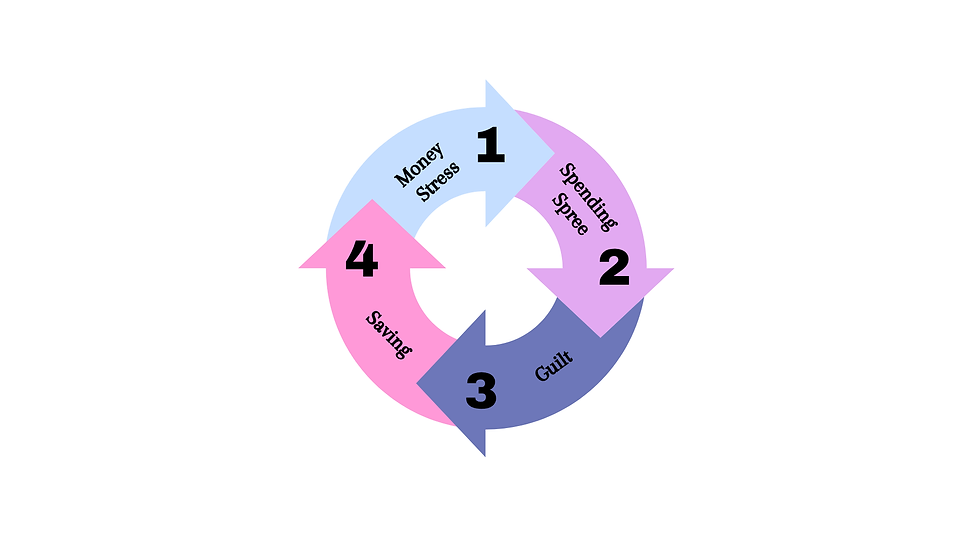
It’s a hard cycle to break (trust me, I’m actively fighting my way out of it right now). But if we want to build real wealth and avoid carrying this stress into our 30s and beyond, we have to find ways to interrupt the pattern.
Here is how I’m doing it.
My "Unqualified Financial Planner" Blueprint to Breaking the Cycle
(Disclaimer: I am not your financial advisor, just a fellow 20-something coming of age in the city!)
The single best thing I’ve done to protect my money from myself is automating my finances. The moment money enters my account, it gets routed before I even have the chance to panic-spend it.
Here is my exact system:
1. High-Yield Savings Account (HYSA)
Every single month, an automated transfer moves a set amount from my checking account straight into my HYSA. My money sits there earning passive interest while being safely tucked away. (Drop a comment below if you want to know which HYSA I use!)
2. The Brokerage Account
Next, a set amount automatically moves from checking into my brokerage account. Right now, I keep it simple by focusing on broad market funds and ETFs for long-term growth.
3. The Roth IRA
Once a month (or whenever I land a extra cash or a bonus), I manually transfer funds into my Roth IRA. My long-term vision is to max this out every year—or at least make that a top priority once I graduate!
Why Automation Works (A Kaizen Hack)
Relying on willpower alone when you're stressed is a losing game. Automating this cash flow fixes two major problems for me:
Mental Peace: I feel instantly less stressed because I know my future is being taken care of first.
Friction: By moving the money out of my checking account, it’s much harder to access when I get an impulse to go on a spending spree.
A Moment of Honesty: Writing this down feels insanely vulnerable. Admitting my money struggles out loud—and admitting that I have to build safeguards against my own lack of discipline—is scary. But recognizing our weaknesses is the only way we actually grow.
Managing What's Left: The Checking Account Method
Once my automated savings and investments are cleared out, I handle my day-to-day spending:
Essentials First: I move my exact budget for essentials (rent, gas, groceries) into a normal checking/savings bucket so it’s ready when bills are due.
Guilt-Free Fun Money: Whatever is left in my primary checking account is mine to play with. Whether that’s going out to dinner with friends or a weekend camping trip, I can spend it without an ounce of guilt because my savings are already taken care of.
What’s Next on My Journey?
Making these small structural changes has completely shifted my mindset. I feel optimistic that as I build this muscle, it’s only going to get easier.
My next goal? Figure out where I can trim unnecessary expenses so I can bump up my automated savings transfers every month.
Now I want to hear from you: How do you deal with financial anxiety in your 20s? And if you have any secret tips on where to cut expenses without ruining your social life, drop them in the comments!
Comments